Key points at a glance
- Your canton of residence is responsible: it decides who is eligible, how much you get and by when you must apply.
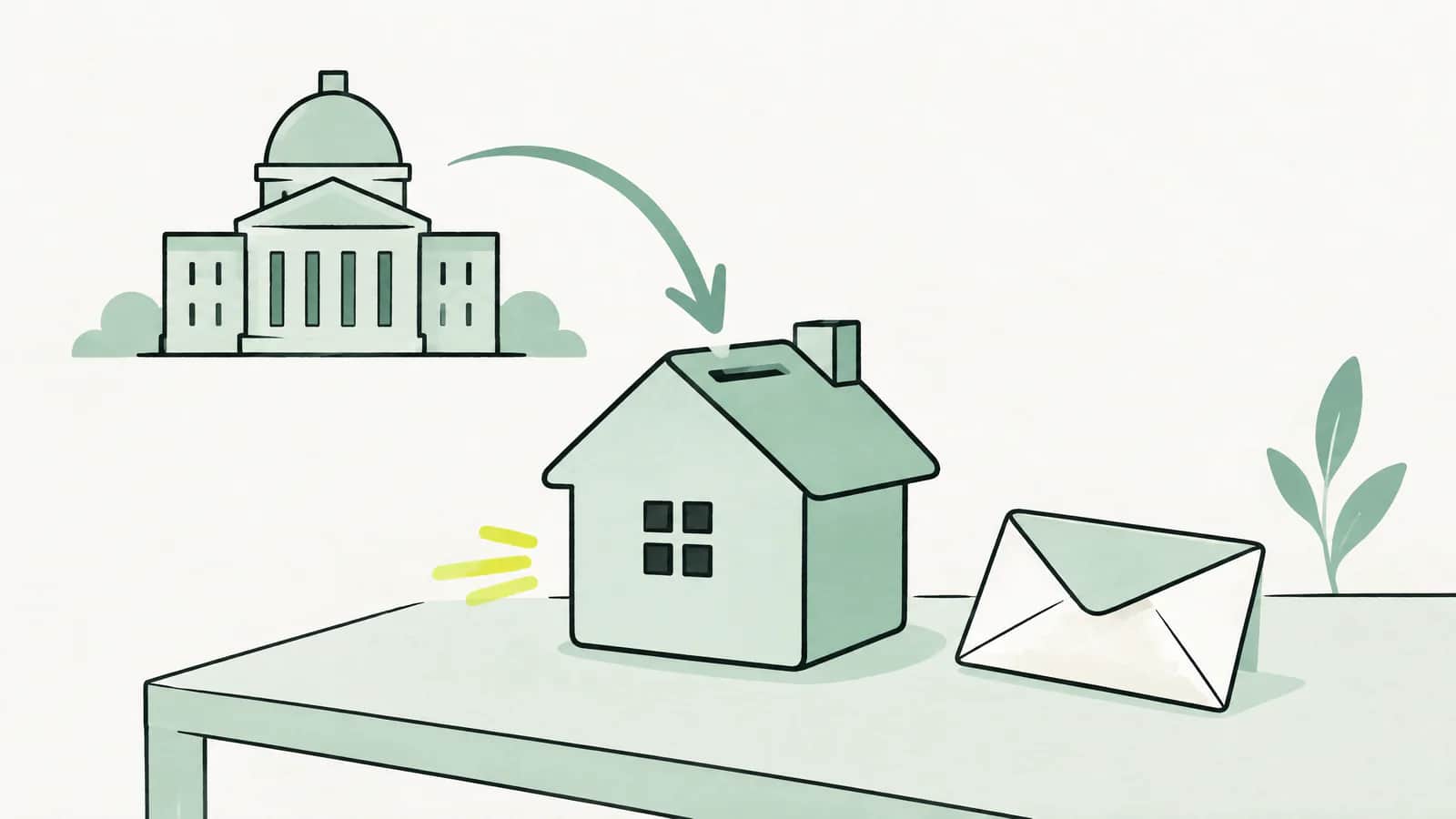
- The canton pays the subsidy directly to your health insurer; you do not receive any money, but a lower premium bill.
- For lower and middle incomes, the canton must reduce the premiums of children by at least 80% and of young adults in education by at least 50%.
- In 2024 around CHF 6.6 billion in premium subsidies were paid out, of which CHF 3.3 billion came from the federal government (FOPH).
- Since 01.01.2026 every canton must spend a minimum share of the gross costs of compulsory health insurance on premium subsidies, at least 3.5% in 2026 and 2027.
What is a premium subsidy?
The premium subsidy is the social balancing mechanism in basic health insurance. Because all insured persons with the same insurer, region and age group pay the same premium, a high premium hits low-income households particularly hard. The Federal Health Insurance Act (KVG) therefore obliges the cantons to reduce the premiums of insured persons on modest incomes. The official German abbreviation is IPV, for individual premium reduction. In French-speaking Switzerland it is called the “subside”.
The subsidy applies only to the basic health insurance premium. Premiums for supplementary insurance, the deductible and the retention fee are not subsidised. Nor is it social assistance: if you meet your canton’s conditions, you are entitled to it, and unlike social assistance it does not have to be repaid if your financial situation improves later. The canton can reclaim it if your entitlement was calculated too high, for example because your final tax assessment shows a higher income.
The federal government and the cantons fund premium subsidies jointly. The federal government pays 7.5% of the gross costs of compulsory health insurance and distributes this amount among the cantons according to their resident population. The cantons add their own funds. According to the Federal Office of Public Health (FOPH), a total of around CHF 6.6 billion was paid out in 2024; the federal share was CHF 3.3 billion or 50.6%.
Who sets the rules?
The cantons. They decide who belongs to the group of beneficiaries, how high the subsidy is, how the procedure works and when payment is made. As a result there are 26 different systems with different definitions of income, thresholds and deadlines. The federal government only sets the framework: the obligation to subsidise, the minimum rates for children and young adults, the social target and, since 2026, a minimum contribution from each canton.
How it works
In most cantons the premium subsidy works in four steps:
- Determining eligibility: The canton calculates a relevant income. It is almost always based on your tax assessment, plus part of your assets and adjusted for certain deductions.
- Calculating the subsidy: Many cantons work with a reference premium per person, a benchmark amount set by the canton. From this they deduct a share, expressed as a percentage of the relevant income. Other cantons use fixed income bands.
- Application or automatic check: Some cantons write to people who may be entitled based on tax data, often with a code for applying online. Others require an application, usually with a fixed deadline.
- Payment to the insurer: The canton informs the health insurer of the eligible persons and the amount. The insurer deducts the subsidy from the premium bill and informs you at the latest with the next bill.
Because the canton pays the insurer, the subsidy generally cannot be higher than your actual premium. If your premium is lower than the calculated amount, for example because of a low-cost model or a high deductible, at most your premium is subsidised. The exact rule is set out in cantonal law.
Special rules for children and young adults
A federal requirement applies to families on lower and middle incomes: children’s premiums must be reduced by at least 80%, and those of young adults in education by at least 50%. What counts as “lower and middle incomes” is again defined by the canton. Depending on the canton, young adults aged 19 to 25 are assessed on their own or together with their parents.
Supplementary benefits and social assistance
If you receive supplementary benefits to the old-age and survivors’ insurance (AHV/AVS) or invalidity insurance (IV/AI), you receive a flat-rate amount for basic health insurance equal to the cantonal or regional average premium, but no more than your actual premium. This amount goes directly to the insurer. How the premiums of people on social assistance are covered is up to the canton. In Aargau, for example, they receive at most the reference premium, and the municipalities can claim the difference from the actual premium (GDK synopsis 2026).
The new minimum contribution of the cantons
On 01.01.2026 the indirect counter-proposal to the premium relief initiative came into force. Since then, every canton must set the maximum share of disposable income that the premium may account for (social target). It must also spend a minimum share of the gross basic health insurance costs of its residents on premium subsidies. Depending on the premium burden of the 40% with the lowest incomes, this share is between 3.5% and 7.5%. For the first two years, i.e. 2026 and 2027, a minimum share of 3.5% applies to all cantons.
Legal basis
Premium subsidies are governed by Art. 65 of the Federal Health Insurance Act (KVG). Art. 65 para. 1 KVG obliges the cantons to grant premium subsidies to insured persons on modest incomes and to pay the contribution directly to the insurers. Under para. 1bis, for lower and middle incomes the cantons reduce children’s premiums by at least 80% and those of young adults in education by at least 50%.
Since 01.01.2026, paras. 1ter to 1octies apply: each canton sets the maximum share of disposable income that the premium may account for (para. 1ter) and spends a minimum share of the gross costs of basic health insurance on premium subsidies each year (para. 1quater). If premiums account for less than 11% of income for the 40% of insured persons with the lowest incomes, the minimum share is 3.5%; at 18.5% or more it is 7.5%, and in between it rises linearly (para. 1quinquies). Under the transitional provision, 3.5% applies to all cantons for the first two calendar years. The details of the calculation are set out in the Ordinance on Premium Subsidies by the Confederation and the Cantons (VPVK).
Art. 65 para. 3 KVG requires the cantons, when assessing eligibility and in particular on application, to take into account the most recent income and family circumstances and to pay in such a way that entitled persons do not have to advance the premium. Under para. 4 the cantons inform regularly about the right to premium subsidies, and under para. 4bis they notify insurers of entitled persons and amounts early enough for these to be taken into account on the bill. The federal contribution of 7.5% of gross costs is governed by Art. 66 KVG. Special rules apply to insured persons resident in the EU, Iceland, Norway or the United Kingdom (Art. 65a and 66a KVG).
Example: basic formula of the canton of Aargau 2026
According to the overview published by the Swiss Conference of Cantonal Health Directors (GDK) for 2026, the canton of Aargau calculates as follows: premium subsidy = sum of the household’s reference premiums minus 17.5% of the relevant income. The relevant income is taxable income plus 20% of taxable assets from the tax assessment for the year that began three years before the entitlement year. The 2026 reference premiums are CHF 5,830 a year for adults, CHF 4,260 for young adults and CHF 1,380 for children.
The Keller family lives in Aarau: two adults and two children under 19. The sum of their reference premiums is 2 × CHF 5,830 + 2 × CHF 1,380 = CHF 14,420 a year.
| Relevant income | 17.5% of it | Subsidy per year | per month |
|---|---|---|---|
| CHF 50,000 | CHF 8,750 | CHF 5,670 | CHF 472.50 |
| CHF 60,000 | CHF 10,500 | CHF 3,920 | CHF 326.67 |
| CHF 70,000 | CHF 12,250 | CHF 2,170 | CHF 180.83 |
| CHF 82,400 | CHF 14,420 | CHF 0 | CHF 0 |
The example shows why comparing across cantonal borders is difficult: other cantons have different reference premiums, different percentages, different definitions of income and different deadlines. You can check your entitlement in your canton with the premium subsidy check, which links to the responsible office. The rules for Zurich are under premium subsidy Zurich.
What this means for you
Check every year whether you are eligible, especially if your income or household has changed. Here is how:
- Find the responsible office: In many cantons this is the cantonal social insurance office (SVA) or compensation office (Ausgleichskasse); in others it is the tax office or a health department.
- Watch the deadlines: Many cantons have application deadlines that expire before or shortly after the start of the entitlement year. If in doubt, a missed deadline costs you a whole year.
- Report changes: If your income falls sharply, for example due to unemployment, separation or the birth of a child, you can ask for a new calculation based on your current circumstances. If it rises, report that too, to avoid repayment claims.
- Still compare premiums: The subsidy is often a fixed amount. If you choose a cheaper insurer or model, more of the contribution is left for you. The premium calculator shows the offers in your municipality, and key figures on the insurers are under health insurers.
The premium subsidy also plays a role in your tax return, because it lowers the premium you pay yourself. How this affects the insurance deduction is explained under tax deduction for health insurance premiums.
Common mistakes
- Waiting for the canton to get in touch. Not all cantons write to people who are entitled. If you have to apply yourself and do not, you lose money.
- Missing the deadline. Application deadlines are set by each canton and some fall early in the year or even in the previous year. Note down your canton’s date.
- Not reporting changes in income. If you have received too much, you have to pay it back. If you earn less than in your tax assessment, many cantons let you ask for a new calculation.
- Counting on the subsidy for supplementary insurance. It applies only to basic health insurance.
- Comparing your canton with others. Income thresholds from a neighbouring canton say nothing about your entitlement.
Frequently asked questions
At what income do you get a premium subsidy?
There is no nationwide threshold. Each canton calculates with its own relevant income, usually taxable income plus part of your assets, and its own reference premiums. Only the calculation of your canton of residence shows whether you are eligible.
Do I have to apply for a premium subsidy?
That depends on the canton. Some cantons check eligibility using tax data and write to people who may be entitled; others require an application by a deadline. In many cantons, missing the deadline means losing the entitlement for that year.
Is the premium subsidy paid out to me?
No. The canton pays the contribution directly to your health insurer, which deducts it from your premium bill. Your insurer must inform you of the amount of the subsidy at the latest with the next bill.
Can I be asked to pay back a premium subsidy?
Yes, if it turns out that you were not entitled or were entitled to less, for example because your final tax assessment shows a higher income. So report significant changes in your income or household to the responsible office immediately.
Are pensioners entitled to premium subsidies?
Yes, entitlement depends on income, not age. If you receive supplementary benefits to the old-age and survivors’ insurance (AHV/AVS) or invalidity insurance (IV/AI), you receive an amount for basic health insurance through these benefits, which is also paid directly to the insurer.
Related terms
- Supplementary benefitsSupplementary benefits (Ergänzungsleistungen, EL) are means-tested payments from the Confederation and the cantons for people receiving an AHV or IV pension whose income does not cover minimum living costs. For basic health insurance, they include a lump sum paid directly to your health insurer. In addition, the canton reimburses the deductible, retention fee and other illness costs.
- PremiumThe premium is the amount you pay your health insurer for basic health insurance, in advance and usually monthly. It depends on the insurer, where you live, your age group, your deductible and your insurance model, but not on your income or health. In 2026 the mean premium in Switzerland is CHF 393.30 a month.
Sources
- Federal Health Insurance Act (KVG), Art. 65, version in force since 01.01.2026 (German)Art. 65 KVGfedlex.admin.ch
- Federal Health Insurance Act (KVG), Art. 66 (federal contribution)Art. 66 KVGfedlex.admin.ch
- Ordinance on Premium Subsidies by the Confederation and the Cantons (VPVK) (German)fedlex.admin.ch
- FOPH: Health insurance: Premium subsidiesbag.admin.ch
- FOPH: Factsheet “Premium subsidies” of 23.09.2025 (German)bag.admin.ch
- GDK (Swiss Conference of Cantonal Health Directors): Overview of cantonal premium subsidy systems 2026 (synopsis, without guarantee) (German)gdk-cds.ch