Key points at a glance
- The MiGeL is Annex 2 to the Health Care Benefits Ordinance (KLV) and is published by the FOPH (Art. 20a KLV).
- Basic health insurance only pays for a product if it has been prescribed by a doctor and is on the list (Art. 25 para. 2 let. b KVG, Art. 20 KLV).
- A maximum reimbursement amount (HVB) applies to each product; you pay anything above it yourself (Art. 24 para. 3 KLV).
- The list as of 01.07.2026 contains 786 items in 24 product groups, from suction devices to digital health applications.
- Expensive, reusable devices are generally rented rather than bought (Art. 24 para. 4 KLV).
What is the MiGeL?
MiGeL is the German abbreviation for the Aids and Appliances List (Mittel- und Gegenständeliste). It lists the medical products that compulsory basic health insurance pays for when a doctor prescribes them. Legally, the MiGeL is Annex 2 to the Health Care Benefits Ordinance (KLV). Because it is so extensive and changes so often, it is not published in the official compilation of federal legislation but as a PDF and Excel file on the website of the Federal Office of Public Health (FOPH, in German BAG) (Art. 20a para. 3 KLV).
The MiGeL is one of several positive lists in basic health insurance. Each list covers its own area:
- List of Pharmaceutical Specialties (SL): medicines covered by health insurance, with prices; see List of Pharmaceutical Specialties.
- List of Analyses (AL): laboratory analyses with their tariff; see List of Analyses.
- MiGeL: aids and appliances used for examination or treatment.
Together with the other annexes to the KLV, these lists make up the benefits covered by compulsory health insurance. Anything not on them is, in principle, not paid for by basic health insurance.
The MiGeL covers products that you use outside hospitals and doctors’ practices. It applies in two situations (Art. 20 para. 1 KLV): either you use the product yourself or with the help of someone who is not professionally involved in your treatment, such as a family member; or a nurse, a home care (Spitex) organisation or a nursing home uses it as part of the care prescribed by a doctor. Material that a doctor uses in the practice or a hospital uses during treatment is billed through their tariffs, not through the MiGeL (Art. 20 para. 2 KLV).
In everyday language, people also speak of aids and appliances. That term is broader, however: many everyday aids, for example for people with disabilities, are covered by other social insurance schemes and not through the MiGeL.
How it works
How you get the product
- Doctor’s prescription: Your doctor prescribes the product. For certain products, a chiropractor may also do so (Art. 20 para. 1 let. a KLV).
- Supply by an approved provider: You obtain the product from a dispensing provider approved under Art. 55 of the Health Insurance Ordinance (KVV), such as a pharmacy, a medical supply shop or a home care organisation.
- Billing: The provider sends the bill to the insurer or to you. The insurer reimburses no more than the maximum reimbursement amount (HVB) on the list (Art. 24 para. 3 KLV).
- Co-payment: The insurer applies your deductible and a 10% retention fee to the amount reimbursed, as with any other benefit.
A maximum amount instead of a fixed price
The MiGeL does not set fixed prices. For each item, it sets a maximum reimbursement amount (Art. 24 para. 1 KLV). Providers may set their own prices. If the price is above the maximum amount, you pay the difference (Art. 24 para. 3 KLV). It is therefore worth comparing pharmacies, medical supply shops and mail-order suppliers.
For some items there are two amounts: the maximum amount for use by yourself, and a lower maximum amount for use in a nursing home or by nurses and home care organisations (Art. 24 para. 2 KLV).
Buying or renting
Reimbursement may be set as a purchase price or as a rental price. Expensive devices that can later be reused by other patients are generally rented (Art. 24 para. 4 KLV). With rental, maintenance and adjustment are included in the rental price; with a purchase, the insurer only pays for adjustment and maintenance if the list provides for it (Art. 24 para. 5 KLV).
Limitations
Many items are subject to limitations (Art. 22 KLV). A limitation defines for which indication, in what quantity or for how long a product is paid for. For example, the insurer only pays for the purchase of an electric double breast pump for premature babies, and for the rental of an electric breast pump for a maximum of eight weeks, extendable by a further eight weeks in justified cases (MiGeL as of 01.07.2026, item 01.01). For some product groups, such as repairs to purchased suction devices, the list requires the insurer’s prior cost approval.
Legal basis
- Art. 25 para. 2 let. b KVG: Basic health insurance covers aids and appliances prescribed by a doctor that are used for examination or treatment. Art. 25a para. 1bis KVG extends this to products used in nursing care.
- Art. 52 para. 1 let. a no. 3 KVG: The Federal Department of Home Affairs (FDHA) issues the provisions on the obligation to pay and the amount of reimbursement. Under Art. 52 para. 3 KVG, the products may be billed at no more than these reimbursement rates.
- Art. 20–24 KLV: Principle of reimbursement (Art. 20), the list as Annex 2 (Art. 20a), application for new products (Art. 21), limitations (Art. 22), requirements (Art. 23) and amount of reimbursement, with the maximum amount, the difference payable by the insured person, and purchase or rental (Art. 24).
- Art. 55 KVV: Requirements for dispensing providers that may bill basic health insurance.
The effectiveness, appropriateness and cost-effectiveness criteria also apply to the MiGeL: a product is only added if it is effective, appropriate and cost-effective (Art. 32 KVG).
Example: crutches and a breast pump
Sara is 33 and has a CHF 300 deductible, which she has already used up this year. After foot surgery, her doctor prescribes crutches. A few months later, after giving birth, she needs an electric breast pump on prescription because a MiGeL limitation is met. The amounts are taken from the MiGeL as of 01.07.2026.
| Product | Provider’s price | Maximum amount (own use) | Reimbursed by insurer before retention fee | Sara’s share |
|---|---|---|---|---|
| Adult crutches, ergonomic grip, purchase (item 10.01.01.00.1) | CHF 49.90 | CHF 35.13 | CHF 35.13 | CHF 14.77 difference plus CHF 3.51 retention fee |
| Electric breast pump, 56-day rental (item 01.01.03.00.2) | CHF 2.31 per day | CHF 2.31 per day | CHF 129.36 | CHF 12.94 retention fee |
| Accessory set for the rental pump (item 01.01.04.00.1) | CHF 27.85 | CHF 27.85 | CHF 27.85 | CHF 2.79 retention fee |
For comparison: an electric single breast pump for purchase, including the accessory set, has a maximum amount of CHF 175.65. If longer use is foreseeable, the list recommends buying. The page breast pump explains more about how breast pumps are reimbursed.
What this means for you
- Get the product prescribed. Without a doctor’s prescription, basic health insurance pays nothing. Ask your doctor to state the quantity or duration on the prescription.
- Ask about the maximum amount. The provider knows the maximum reimbursement amount. Before buying, ask whether the price is above it and how much you will have to pay.
- Compare providers. Because prices are not fixed, pharmacies, medical supply shops and mail-order suppliers may charge different amounts.
- Consider renting instead of buying. For short-term use, renting is often cheaper. Check the maximum rental period in the limitation.
- Factor in the co-payment. The deductible and 10% retention fee also apply to MiGeL products. The comparison in the premium calculator shows which deductible suits you.
- Benefits beyond the list. Some supplementary insurance policies contribute to products that are not on the MiGeL. You can see what individual insurers offer in the profiles under health insurers.
Common mistakes
- Buying a product without a prescription and submitting it afterwards. Without a doctor’s prescription there is no entitlement, even if the product is on the list.
- Assuming the insurer pays the full price. The insurer pays no more than the maximum amount. More expensive models, colours or brands are at your expense.
- Overlooking the limitation. Many items only apply to certain indications, quantities or rental periods. The insurer does not pay for anything beyond that.
- Confusing the MiGeL with hospital material. Anything used in hospital or at the doctor’s practice is billed by the provider through its tariff and does not appear on your MiGeL bill.
- Using an out-of-date list. The MiGeL usually changes on 1 January and 1 July. The version in force on the day the product is supplied is what counts.
We explain how we handle federal data under how we calculate. You will find all terms in the glossary.
Frequently asked questions
What is on the MiGeL?
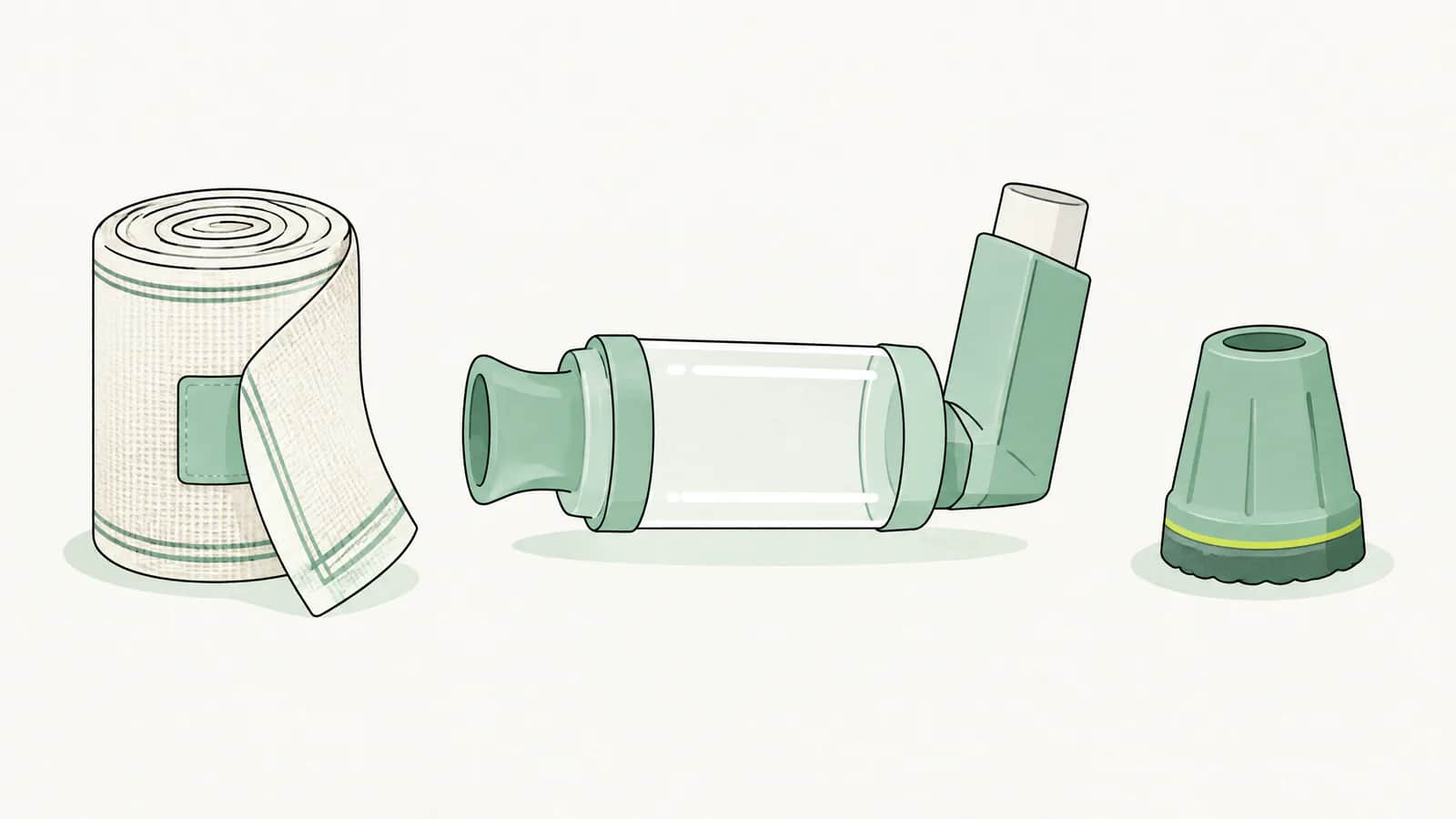
Medical products that you use at home yourself or with the help of relatives, or that nursing professionals use. Examples include walking aids, incontinence products, compression stockings, inhalers, blood glucose meters, stoma products and dressings.
Does health insurance pay for an aid without a prescription?
No. Basic health insurance only reimburses aids and appliances prescribed by a doctor, and for certain products also those prescribed by a chiropractor. Without a prescription, you pay yourself.
Why do I have to pay something even though the product is on the MiGeL?
Firstly, the deductible and retention fee apply, as with any basic health insurance benefit. Secondly, the insurer pays no more than the maximum reimbursement amount. If the product you choose is more expensive, you pay the difference.
How often is the MiGeL updated?
The FOPH generally publishes a new complete list twice a year, as of 1 January and as of 1 July. The current list and all previous versions are available on the FOPH website.
Related terms
Sources
- Health Care Benefits Ordinance (KLV), Art. 20–24Art. 20–24 KLVfedlex.admin.ch
- Federal Health Insurance Act (KVG), Art. 52Art. 52 para. 1 let. a no. 3 KVGfedlex.admin.ch
- Federal Health Insurance Act (KVG), Art. 25Art. 25 para. 2 let. b KVGfedlex.admin.ch
- Health Insurance Ordinance (KVV), Art. 55Art. 55 KVVfedlex.admin.ch
- FOPH: Guide “The compulsory health insurance system”, as of 1.1.2026, sections “Aids and appliances” and “Aids and Appliances List” (PDF)bag.admin.ch
- FOPH: Aids and Appliances List (MiGeL) (German; also available in French and Italian)bag.admin.ch
- FOPH: Aids and Appliances List as of 1 July 2026 (Excel, German)bag.admin.ch